Jackbox Features That Make Group Play More Fun
Articles

Group gaming becomes more engaging when everyone can contribute rather than simply watching one person play. Jackbox-style party games are designed around this principle, combining quick prompts, humorous responses, voting, and audience participation to create a lively shared experience.
Understanding Jackbox Group Play can help groups make better use of these interactive mechanics. Instead of relying on complex controls, players can focus on creativity, quick decisions, and reactions from friends, making each round feel dynamic and unpredictable.
Jackbox Features For Group Play
Jackbox games are built around social interaction. Their mechanics allow several people to participate simultaneously or contribute at different points throughout a round, creating a more inclusive format for casual gatherings.
Multiplayer Features For Friends
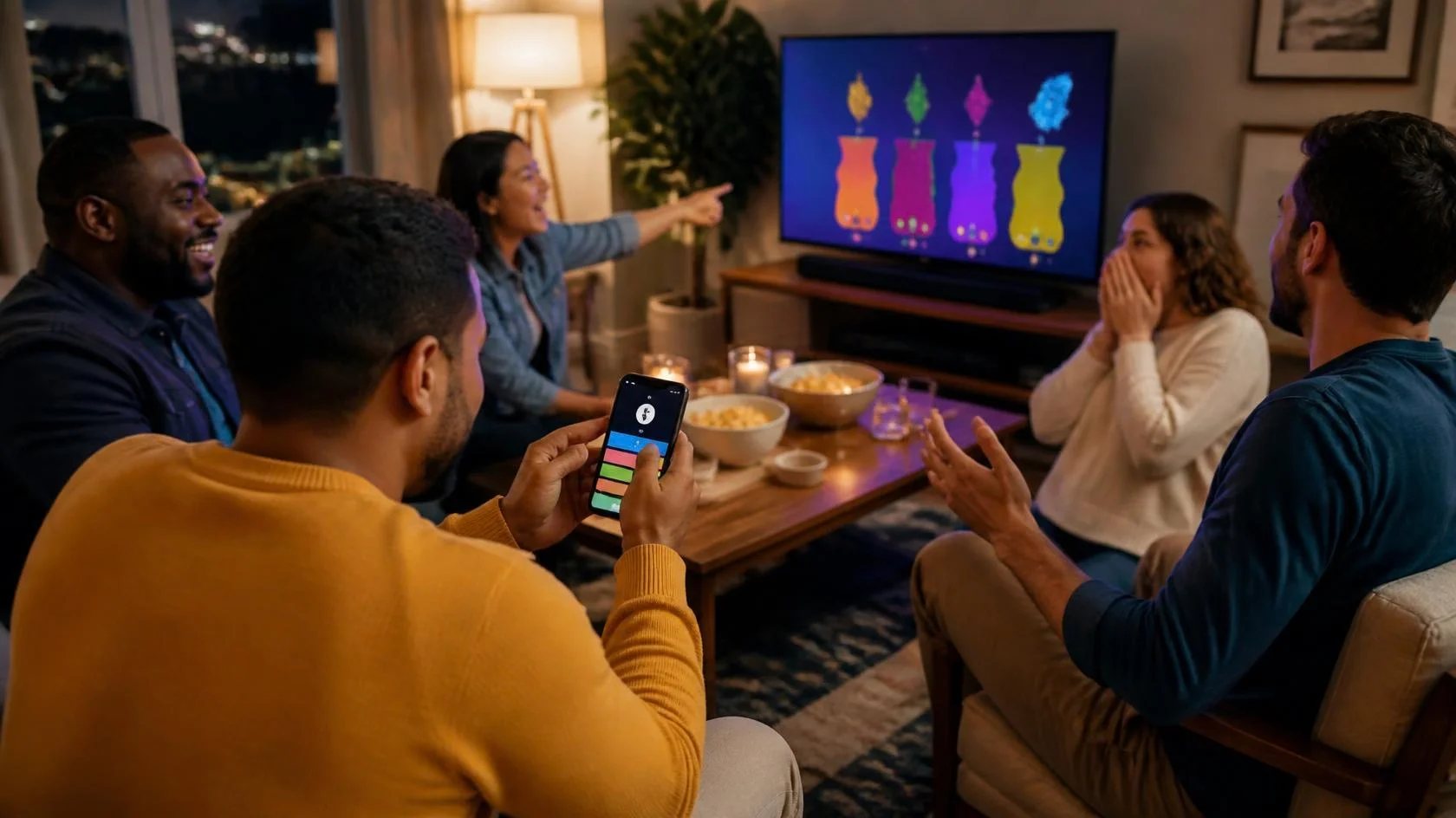
Multiplayer functionality is central to the Jackbox experience. Players can commonly join using their own devices, allowing each participant to submit answers, make decisions, or respond to prompts.
This approach removes the need for every player to share a single controller. More importantly, it gives everyone a direct role in the unfolding game.
Simple Controls For Players
Complex controls can create unnecessary friction during a party session. Jackbox games generally favor straightforward interactions, allowing participants to concentrate on the prompt instead of memorizing button combinations.
Simple input also makes the games approachable for people who do not regularly play video games.
Audience Participation During Games
Spectators do not always have to remain passive. Audience mechanics can allow additional participants to vote, influence outcomes, or react to what the primary players submit.
This creates a broader social layer and gives people who are not actively playing a reason to remain engaged.
Features That Keep Players Active
Player Interaction Features play an important role in keeping everyone involved during a group gaming session. Voting, creative responses, and quick challenges give participants different ways to interact with the game while also reacting to their friends.
Interactive Voting During Games
Voting adds a democratic layer to many party-game formats. Players can evaluate responses, choose favorites, or influence the direction of a round.
The mechanism is simple, but its social consequences can be surprisingly entertaining. A seemingly harmless answer can suddenly become the group’s favorite.
Creative Responses From Players
Open-ended prompts encourage players to think beyond predetermined choices. Responses can be witty, absurd, clever, or intentionally ridiculous.
This creative latitude is one reason party games can generate different experiences every time they are played. The rules remain stable while the human input constantly changes.
Quick Challenges Between Friends
Short challenges help maintain momentum. Instead of spending several minutes on one complicated objective, players can make rapid decisions and immediately see the consequences.
This creates a brisk cadence that works particularly well in social environments where attention frequently shifts between gameplay and conversation.
Making Group Sessions More Fun
The right game mechanics are only part of the experience. Groups can also adjust how they organize sessions, select games, and encourage participation to make each round more enjoyable.
Choosing Games For Groups
Consider the size and personality of the group before selecting a game. Some titles emphasize comedy and improvisation, while others focus more heavily on trivia, competition, or strategic decisions.
Choosing a suitable format prevents players from feeling disconnected from the activity.
Keeping Everyone Involved
Participation should not be limited to the person currently holding the spotlight. Encourage quieter participants to contribute through voting, reactions, or creative submissions whenever the game permits.
Jackbox-style games can work particularly well because participation does not necessarily require advanced gaming skills.
Using Features For More Interaction
Features such as voting, audience participation, written responses, and timed challenges can create multiple interaction points. These mechanics transform the game from a simple digital activity into a shared social event.
Instead of focusing exclusively on winning, groups can react to unusual answers and unexpected outcomes. That social spontaneity often becomes the most memorable part of the session.
Explore Jackbox For Group Gaming
Jackbox-style experiences demonstrate how relatively simple mechanics can produce substantial social engagement. Multiplayer access brings people into the same activity, while voting, creative prompts, and audience participation give everyone opportunities to influence the session.
Game designer Jane McGonigal has emphasized the social potential of games, describing them as “a way of structuring human experience.” This perspective helps explain why interactive party games can encourage conversation and collaboration beyond their basic rules.
For a more enjoyable group session, choose games that match the group’s size and personality, keep participation accessible, and make full use of interactive mechanics. With the right combination of simplicity and creativity, Jackbox Group Play can turn an ordinary gathering into a lively shared experience.